
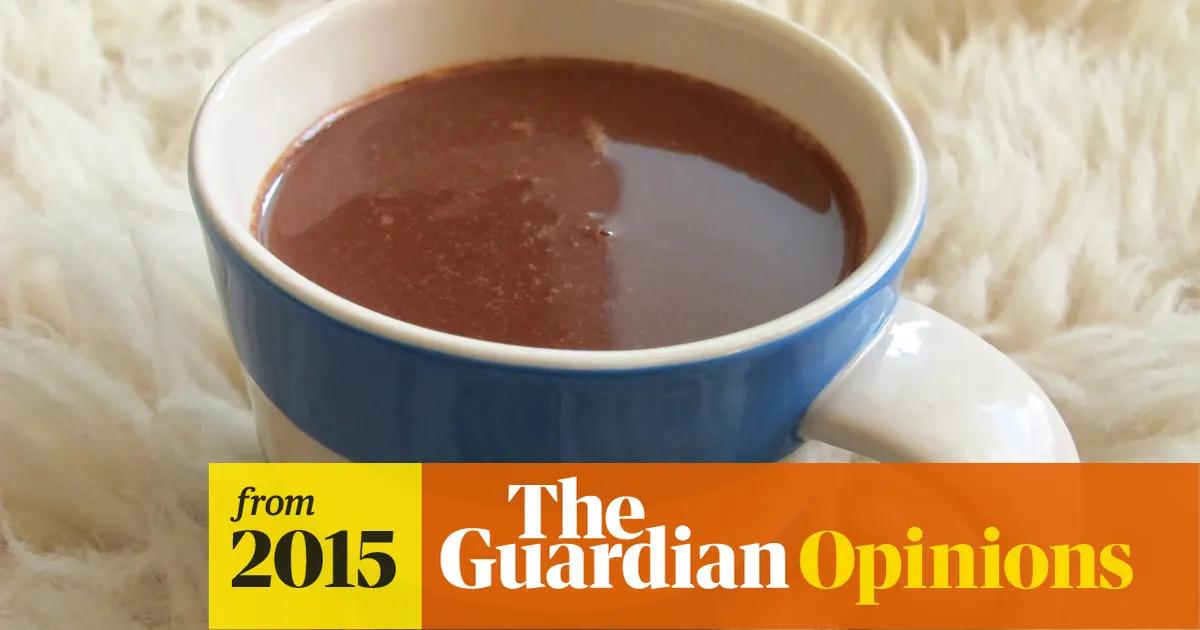
Few beverages are as engrained in Americans’ collective childhood memories quite like hot chocolate. It’s a drink that reminds us of snow days, sledding, or a quiet day watching the snow fall.
What is it about a hot mug of chocolate in the depths of winter that brings a smile? More so then eating a bar of chocolate?
Well, for one, it’s hot and truly warms you up on a cold day. Plus, the luxurious taste and feel of drinking hot chocolate that then warms your whole body is exquisite! It is thick, silky and rich tasting!
Part of what might make a mug of hot chocolate so satisfying are the possible health benefits to be gleaned from drinking it. A flurry of medical studies on dark and hot chocolate have confirmed this – evidenced by the explosion of studies extolling chocolate’s virtues within the last decade. One states that hot chocolate actually increases the microcirculation in your skin, warming you. Another found that the myriad of chemical compounds contained in chocolate trigger the brain to release endorphins that induce feelings of feelings of calm. In all of these studies, a drinking chocolate or hot chocolate was used with the subjects (what a job that would be!)
Chocolate also contains many minerals, vitamins and biochemical compounds. Also, high quality chocolate contains cocoa butter, the vegetable fat found in cocoa beans, which is a natural energy source.
Chocolate was consumed almost exclusively as a drink throughout most of its 4,000-year history, starting in Central America and in the lowlands of Mexico with the Mesoamericans. Hot chocolate was also a luxury, generally only within reach for wealthy elites and royalty.
It was only until around 1850 or so that bars of eating chocolate started to be made. The price of cocoa and cocoa powder started to fall after the invention of processing equipment– like the hydraulic press, which extracts cocoa butter from the cocoa – and the expansion of cacao farming across the world’s tropical forests from 1850 to 1870.
All these factors united to bring hot cocoa and hot chocolate to the masses. But the association of chocolate with decadence and luxury still lingers hundreds of years later.
The style of hot chocolate we consume has also changed over centuries. Around the year 2000 BC, many Mesoamerican cultures began to experiment with making drinking chocolates. This early concoction was a thick, spicy concoction that was complex, lightly sweetened with honey and made with water – think chili peppers and flowers. From the 16th through 19th centuries, the Europeans added a more sweetness – sugar and other spices like cinnamon and perfumes. As time went on, more sugar was added and the spices were stripped away until it arrived at its classic American incarnation: sugary sweet, thin and without much actual cocoa. In Mexico, colonial and modern hot chocolate often contains almonds and cinnamon, and a whole lot of sugar, too.
In a letter to John Adams dated 1785, Thomas Jefferson wrote: “The superiority of [chocolate] both for health and nourishment will soon give it the same preference over tea and coffee in America which it has in Spain.”
Now, instant hot chocolate is ubiquitous around the world. But the tradition of drinking thicker, richer and less sweet chocolate is back en vogue. Cafes that serve spicy and flavored hot chocolates, which use very high quality chocolate as a base, are cropping up around the US – a much-welcome trend for chocolate connoisseurs.
The movement for direct trade has become more important to chocolate producers.
This allows most of the small producers around the world – in Central America, South America, the Caribbean, Madagascar and Indonesia – to work directly with cacao growers, paying well above the commodities and “Fair Trade” market prices. This movement not only means higher wages for the growers but also provides help for the cacao grower communities to build necessary infrastructure, such as health and education facilities. There’s also been a very strong interest over the last decade in cultivating and maintaining rarer varieties of cacao – yielding a wider array of choices available to niche consumers.
This also brings the original Mesoamerican flavors of chocolate into the present, coming full circle. Drinking rich, flavorful hot chocolate keeps me a little saner and brings a measure of calmness into my life – that is why I do it!
Yearly, with the Yuletide season comes an increase in the circulation of chocolates and cocoa-based beverages. From festive gift baskets to delicately wrapped boxes and themed Christmas decorations, chocolates have become an integral part of the holiday tradition. While many may not pay attention to this association, the connection between chocolates and the Yuletide season has a rich history that extends beyond mere confectionery.
Sweet cocoa beverages and chocolates are common food items associated with Yuletide, even though the origin stories of Christmas and Yuletide holidays had little to no correlation with chocolate or cocoa.
However, nowadays, there are several varieties of Christmas-themed chocolate recipes, crafts, and beverages. In several places across the world, chocolate has become symbolic to Christmas, just like the fried Turkey is to Thanksgiving in the United States – for them, Christmas isn’t complete without chocolate treats. But how did that happen? Here are some common theories on the association of chocolates with Christmas.
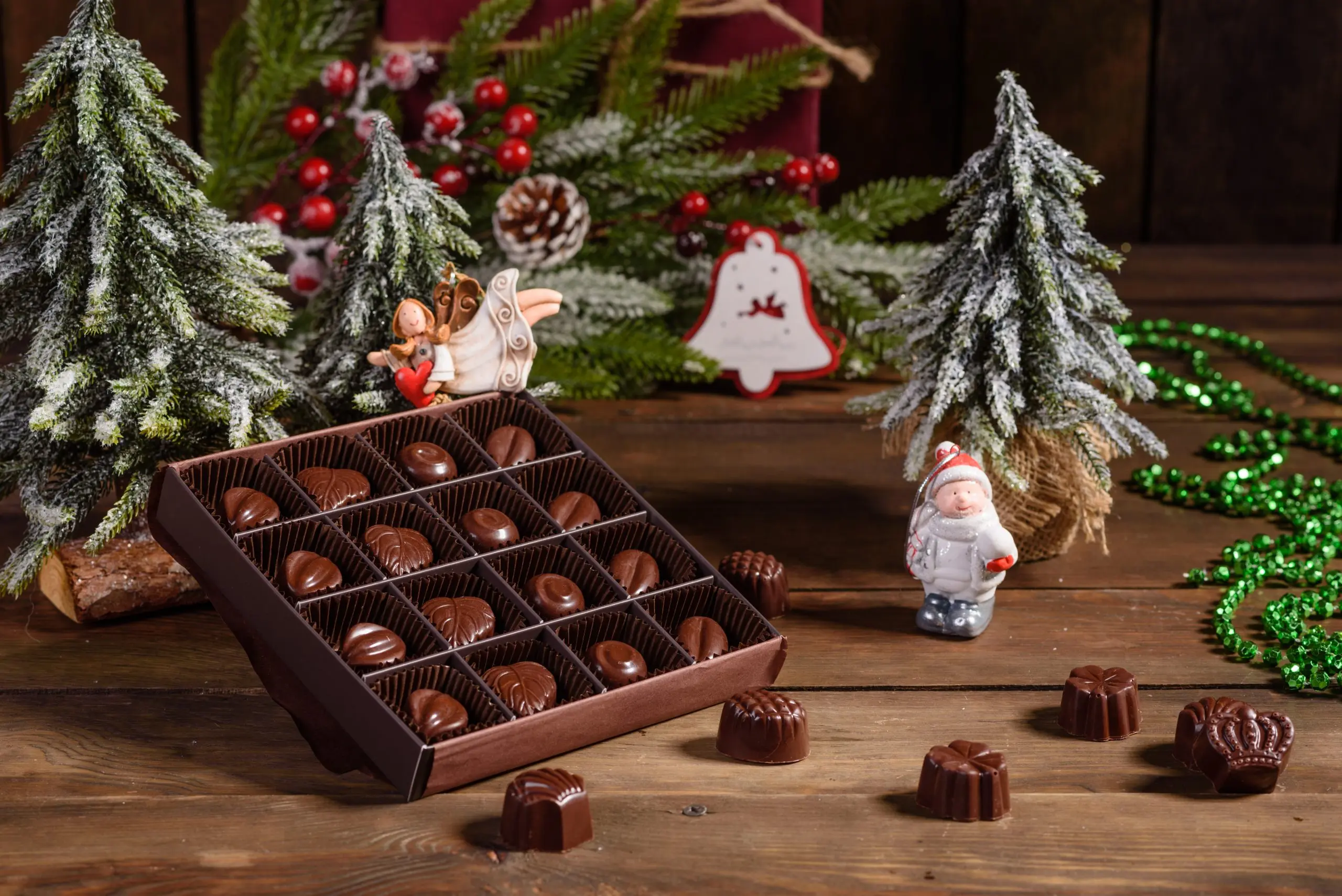
Delicious festive Christmas chocolate and sweets on rustic background
Historical Significance
Cocoa, or Cacao, holds cultural and festive significance in some past cultures. The ancient Greeks called it “Theobroma,” which translates to “Food of the gods.” Hence, they treated it as a revered food item, which they often only consumed on special occasions.
Similarly, the Aztecs also considered cocoa a divine food item, and they often drank “Xocolatl” (Which was Europeanized as ”Chocolate”), a concoction derived from cocoa during special occasions and celebrations.
Moreover, when Europeans discovered chocolate, it was predominantly the royalty that had access to it, and they treated it as a luxury item reserved for festivities, hence how it found its natural inclusion in holiday celebrations.
As such, the origin of cocoa and chocolate consumption has always had a festive and divine undertone, which resonates with the spirit of Christmas.
Mexicans also have a tradition of coating the Christmas turkey with a layer of chocolate. Alongside, the Germans celebrate St Nicholas Day on the 7th of December, during which kids put out Christmas socks and come the next day to find them full of treats, often chocolates and candy.
Symbolism of Sweetness
“Tis the season to be jolly.” Christmas is a time of joy, love, and happy memories. Modern chocolates, with their trademark sweetness, have come to symbolize these sentiments. For kids who are often the most excited for the holidays, Yuletide is the “sweets and gifts season,” with the all-time favourites being chocolate products.
Offering chocolates during the Yuletide season is a gesture of goodwill and affection – another core principle that Christmas stands for. Sharing a box of chocolates with friends and family reflects the spirit of generosity and togetherness that defines the holiday season.
Tradition of Gift-Giving
The tradition of exchanging gifts during Christmas has deep Christian roots, dating back to the story of the Three Wise Men presenting gifts to the infant Jesus. In addition to that, the titular Santa Clause, or Father Christmas, is portrayed as a benevolent figure who goes around leaving gifts for kids on the eve of Christmas.
Chocolates, with their wide appeal and variety, have become a popular choice for gift-giving Whether in the form of a festive chocolate assortment or a personalized box, chocolates make for a thoughtful and generally appreciated gift. You can hardly go wrong with chocolates when not sure what gifts to give for Christmas.
Comfort and Warmth
Christmas occurs in the winter season, characterized by chilly weather. This is also when the Winter Solstice occurs, heralding the harshest season of the year. Chocolates, particularly hot cocoa or rich truffles, provide a comforting and warming experience against the cold.
Over time, indulging in chocolate and cocoa-based beverages has become a cosy ritual, contributing to the feeling of warmth and contentment during the holiday season.
The association between chocolate and the Yuletide season is a delightful and culturally rich tradition. Whether enjoyed as a practice of historical significance, given as a gesture of sweetness and sharing, a thoughtful gift, or a source of comfort and warmth, chocolates and other cocoa-based beverages have become a prominent part of the Christmas experience.
At Sunbeth global concepts we celebrate the sweet association between chocolate and Christmas alongside playing a pivotal role in making it blossom. We take pride in ensuring there is an abundance of chocolate crafts during the most beautiful time of the year.

Our commitment extends beyond mere celebration; We facilitate a seamless transition of cocoa beans from local farms in Nigeria to various chocolate factories in Africa, Europe, America and Asia through our sourcing and distribution network. We guarantee a reliable supply of premium, high quality cocoa beans to processing companies globally, ensuring the primary raw materials needed to create delectable chocolate treats for Christmas are always readily available.
Por qué el chocolate caliente sabe tan rico
Homemade hot chocolate is much better than the hot chocolate mixes that you buy in the grocery store. This article tells you why it better and how to make it. It easy. You'll never want store hot chocolate again.
Four Reasons Why Homemade is Better.
It amazing what good quality cocoa can do for your recipes. It will make them richer, tastier, and more chocolatey. It almost like the difference between good European chocolate and old Halloween candy‚ you can easily taste the difference in the quality.
The Cocoa is Much Better! Those old-school German or Swiss craftsmen have been crafting their art for generations. It gourmet. Imported cocoa just tastes better. It the Cocoa Butter! Cocoa butter makes a better cocoa. Grocery store cocoa has eight, maybe ten percent cocoa butter. Really good cocoa has at least 14% to 16% cocoa butter. The cocoa butter in most of our mixes and recipes has 22% to 24% cocoa butter. If your cocoa has enough cocoa butter, it like drinking fine chocolate. Gourmet cocoa will be amazing. A higher cocoa butter percentage is like adding real chocolate to your hot chocolate. It makes your hot chocolate richer, darker, and more luxuriant.
The hot chocolate mix in the grocery store doesn't do that. They have have a price point to deal with and they can get away with a lesser cocoa.
Real milk just tastes better! You don't put dry milk on your Cheerios. Why would you put dry milk in your hot cocoa?
Of course, your hot cocoa mix in the grocery store uses dry milk, and lowfat or nonfat dry milk besides. Your homemade hot chocolate mix is going to taste richer, better than the hot chocolate mix from the grocery store.
Make the hot chocolate that you love!
Merri Ann, my wife, loves dark chocolate. I prefer a mellow chocolate. If you're making your own hot chocolate, You can use milk chocolate or dark chocolate. And you can use as much chocolate as you like.
And you can adjust it to suit any member of the family. You can make perfect hot chocolate for everyone.
Which chocolate should you choose?
These three cocoas are very good but they do taste different:
- Medium Dark Cocoa is what we use when we want a mellower, softer, more milk chocolate flavor. It still rich and very good but it doesn't have that sharper edge that really dark cocoa has.
- Rich Dark Cocoa is what we use when we want pastries and cookies to taste more chocolatey than goods made with store cocoa. It has the classic taste of dark chocolate and with more cocoa butter, more chocolate taste.
- Belcolade Dark Cocoa will blow you away. It very nuanced. Your first impression is amazing, a classical fine chocolate taste but it complex. drifting into a little different impression once it been in your mouth for a moment. It a very nice experience.
Of course, your hot chocolate is going to taste a little different depending on which cocoa you choose. Which is best? That a personal preference--whichever you like best.
.
Gourmet Hot Chocolate Mix Recipe
This is an easy foolproof recipe. All you do is mix good quality cocoa with sugar and then add milk. This is going to be richer and darker not just because of the cocoa but because of the fresh milk instead of nonfat dry milk. You can add a little vanilla to adjust the flavor if you like. If you want your hot chocolate richer, darker, use a little more cocoa. If you want your hot chocolate milder and sweeter, use more milk. Yield: Four to six servings.
Ingredients
- 1/2 cup sugar
- 1/3 cup rich dark cocoa
- 4 1/2 cups whole milk
- 1/2 teaspoon vanilla (optional)
Directions
In a medium pan, combine the sugar and cocoa powder with a whisk until it is uniformly mixed. Add 1 cup milk and whisk until combined. Cook and stir over medium heat just until it comes to boiling. Gradually add the rest of the milk while whisking. Heat through until hot but not boiling. Add a teaspoon of optional vanilla.
Other spectacular things you can make with really good cocoa:
El chocolate caliente es bueno para el clima frío
381 shares
Nothing beats a Warming Rich and Decadent Hot Chocolate on a cold winter day. It may be dark and cold outside, but holding that warm cup, sipping the liquid gold, everything is just better. It rich in chocolate flavor, made with a few real ingredients and very simple to make.
So I am the type of girl that loves 'bad' weather (although in Norway we say there doesn't exist bad weather, only bad clothing - which is true). I say this because that day is the perfect excuse for a warming rich and decadent hot chocolate. Everything is dark, and we need something to comfort us. YAY.
As I live in a rainy part of Norway, I just can't do it during all dark and rainy days. However, I do it a lot. I simply don't bear the thought of making that instant cocoa powder mixed with hot water. I simply don't see the point in it. If you are going to drink your calories - drink super tasty calories!
And this is my go-to-bad-weather drink!
However, sometimes I crave something a little fresher too, and that when I make apple cider, grapefruit cider, hibiscus tea or this hot orange drink! This way we never get tired of anything!
Step-by-step instructions
What we need is dark chocolate, milk (preferably whole), unsweetened cocoa powder, vanilla, and perhaps more sugar if you prefer. That is it. When making hot chocolate with real chocolate, we need to keep the temperature down. Medium-low, so as to not burn it.
In a medium saucepan, on medium-low, stir the dark chocolate with milk. Once it melted, add in the rest of your ingredients. I'd suggest adding 1 tablespoon of unsweetened cocoa powder, giving it a taste - too bitter? Add a little sugar. Not rich enough? Add more unsweetened cocoa powder. Stir in vanilla extract or vanilla bean sugar if you like.
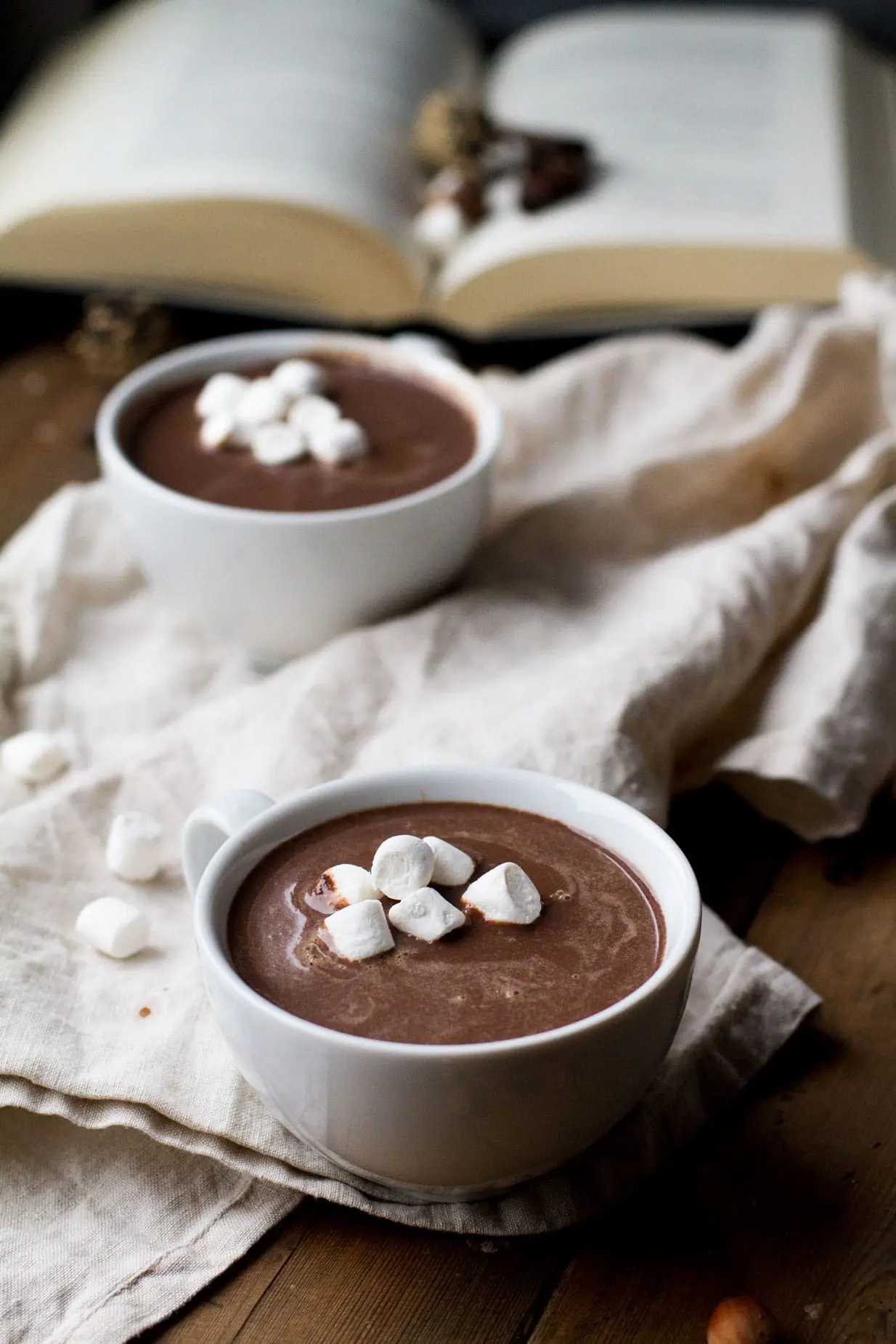
Serve with whipped cream or marshmallows. Get yourself a cookie and read a book while watching the weather outside.
Hope you now see the beauty of cold and rainy days, and of course snowy, silent days. Enjoy this warming rich and decadent hot chocolate and let me know what you think! Either in the comment section below or tag me @thegingerwithspice on Instagram.
Also, don't forget to Pin it for later!
In order to keep the blog up and running this post contains affiliate links, it will be at no extra cost to you, please read the disclosure for more information.
Continue to Content 📖 Recipe Warming Rich and Decadent Hot Chocolate Yield: 4 cups Prep Time: 2 minutes Cook Time: 10 minutes Total Time: 12 minutes Nothing beats a Warming Rich and Decadent Hot Chocolate on a cold winter day. It may be dark and cold outside, but holding that warm cup, sipping the liquid gold, everything is just better. Print Ingredients 150 g dark chocolate, 5 oz
- 1 liter milk, preferably whole milk. 4 cups
- 2 tablespoon unsweetened cocoa powder, more or less to taste
- 1 tablespoon sugar, more or less to taste, optional
- 1 teaspoon vanilla extract, or vanilla bean sugar, optional
Instructions
In a medium saucepan, on low heat, stir the dark chocolate with milk. Once it melted, add in the rest of your ingredients and increase temperature to medium and whisk until it starts to simmer around the edges. I'd suggest adding 1 tablespoon of unsweetened cocoa powder, give it a taste - too bitter? Add a little sugar. Not rich enough? Add more unsweetened cocoa powder. Stir in vanilla extract or vanilla bean sugar if you like. Warm up, but not boil. Serve with whipped cream or marshmallows, if desired.
Nutrition Information:
Yield: 4
Amount Per Serving: Calories: 350 Total Fat: 18g Saturated Fat: 12g Trans Fat: 0g Unsaturated Fat: 6g Cholesterol: 30mg Sodium: 152mg Carbohydrates: 36g Fiber: 2g Sugar: 31g Protein: 19g
Nutrition information isn't always accurate, estimate for informational purposes only.
Did you make this recipe? Please leave a comment on the blog or tag @thegingerwithspice on Instagram, I'd love to see!
Si quieres conocer otros artículos parecidos a El chocolate caliente: un placer invernal puedes visitar la categoría Chocolate.